
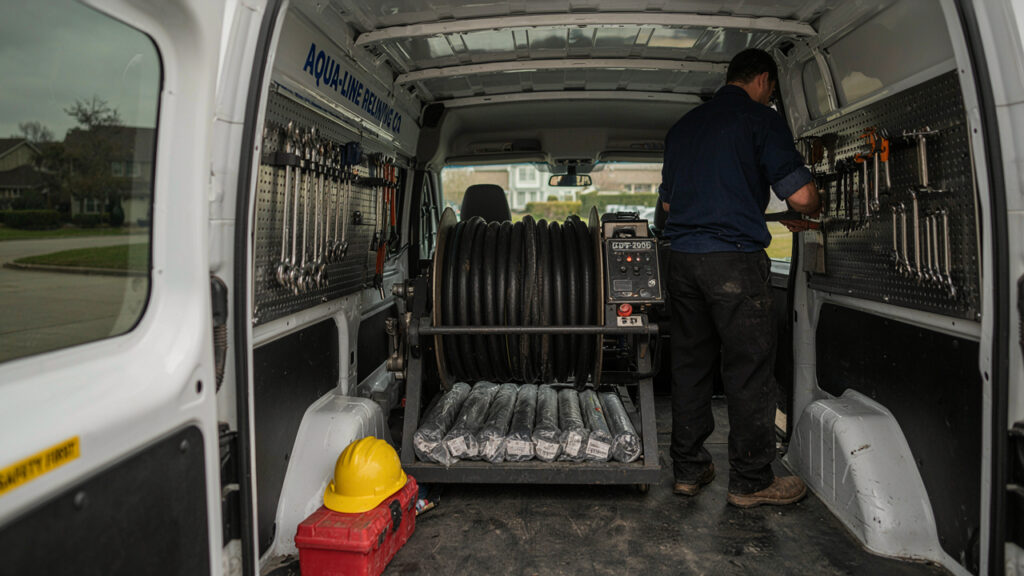
When is excavation necessary instead of pipe relining? The short answer is that excavation is necessary when an underground pipe has completely collapsed, suffers from a severe belly or sag that requires gradient correction, is severely misaligned, or cannot be physically accessed and cleaned. Trenchless pipe repair cannot fix a pipe that has entirely lost its structural shape or required fall.
At Sydney No Dig Relining, we specialise in trenchless drain repairs. It is a highly effective way to fix cracked, leaking and root-infested drains without destroying your landscaping or concrete driveways. However, we are also honest with our customers: pipe relining is not a magic cure for every plumbing problem.
The condition, shape, alignment and accessibility of your existing pipe determine whether relining is actually viable. Below, we explain the genuine physical limitations of trenchless technology and outline exactly when pipe excavation Sydney property owners dread is actually the right technical choice.
What Makes a Pipe Unsuitable for Relining?
When is pipe relining not suitable? To successfully install a structural epoxy liner, the existing pipe (the “host pipe”) must have enough of its original shape intact to allow our equipment to pass through, clean the walls and inflate the liner.
When those physical conditions are lost, trenchless repair is no longer an option.
The Pipe Has Completely Collapsed
There is a significant difference between a cracked pipe, a partially deformed pipe, and a completely collapsed pipe.
Pipe relining works by inserting a flexible, resin-impregnated liner into the damaged drain and inflating it so it cures against the internal walls. If the pipe is completely crushed by ground movement or heavy vehicle traffic, there is no longer a tunnel for the liner to travel through. While we can sometimes mill out partial blockages or minor deformations, a complete structural collapse means the host pipe is gone. In these cases, excavation is necessary to remove the crushed section and lay a new pipe.
The Pipe Has a Severe Belly or Sag
A pipe belly is a low section of a drain where the ground has sunk, causing the pipe’s gradient to drop. Instead of flowing away via gravity, water and waste continually pool in this sagging section.
This is a common issue in older Sydney homes built on reactive clay soils. Because a pipe liner moulds itself to the existing internal profile of the host pipe, relining a bellied pipe simply creates a smooth, sealed belly. It does not correct the underlying gradient. To restore the correct fall required by plumbing standards, the pipe must be physically dug up, realigned and re-supported.
The Pipe Is Severely Misaligned
Over decades, shifting soil and heavy tree roots (Common in areas like the North Shore and the Inner West) can cause the joints of old earthenware drainage pipes to break and shift.
Minor joint displacement can often be bridged safely with a structural liner. However, extreme misalignment creates a severe “lip” or step inside the drain. If the displacement is too large, the liner cannot transition smoothly across the gap. It may snag during installation or cure with a harsh fold that will simply catch toilet paper and cause future blockages. When the pipe geometry prevents a safe liner installation, physical drain excavation Sydney plumbers perform is required to realign the connection.
The Pipe Cannot Be Properly Accessed or Prepared
Relining is “no-dig”, but it is not “no-access”. We still need a practical entry point to insert high-pressure water jetters, robotic cutters and the liner itself. Furthermore, the internal walls of the host pipe must be thoroughly cleaned of roots, scale and debris so the resin can bond properly.
If a pipe has multiple complex bends that equipment cannot navigate, or if it is impossible to clean the pipe adequately without destroying it, targeted excavation becomes necessary.
Can You Reline a Pipe Under a Concrete House Slab?
Yes, pipe relining can often be used for a pipe beneath a concrete slab, driveway or other hard surface, provided the existing pipe is suitable for relining and there is adequate access.
Repairing under-slab drainage is one of the most valuable applications of trenchless pipe repair. Jackhammering through a concrete living room floor or an expensive exposed-aggregate driveway in the Eastern Suburbs is highly disruptive and expensive.
However, the fact that a pipe is located under a slab does not automatically mean it can be relined. The pipe’s physical condition still dictates its suitability. If a pipe under a concrete driveway has completely collapsed or lost its grade, the presence of the driveway cannot magically make an unsuitable pipe suitable for a liner.
How Do Plumbers Decide Between Relining and Excavation?
A competent drainage professional does not guess. The decision between excavation vs pipe relining in Sydney should always follow a strict diagnostic process:
- CCTV Drain Inspection: We push a high-resolution camera down the line to view the interior.
- Identify the Damage: We locate the exact depth and nature of the cracks, breaks or root intrusions.
- Assess Remaining Shape: We confirm whether the pipe still has a sufficient circular profile to accept a liner.
- Check for Collapse or Deformation: We look for crushed sections or displaced joints that are too severe to bridge.
- Assess the Gradient: We check for water pooling that indicates a severe sag or belly.
- Determine Cleaning Viability: We evaluate whether heavy roots and scale can be cleared without destroying the remaining pipe.
- Consider Access: We locate inspection openings to ensure we can physically install the repair.
- Evaluate Surface Conditions: We look at what sits above the pipe (e.g., an established garden, a tiled bathroom floor, or open lawn).
- Compare Repair Options: We weigh the technical viability of trenchless repair against traditional digging.
- Make a Recommendation: We advise the homeowner on the most effective, long-lasting solution based on the evidence.
Pipe Relining vs Excavation: Which Situation Calls for Which?
This table provides a general guide on how different types of damage influence the repair method:
| Pipe condition | Is relining potentially suitable? | Is excavation potentially required? | Why |
|---|---|---|---|
| Cracks & minor fractures | Yes | Usually not | Liner can seal and structurally rehabilitate a suitable host pipe. |
| Tree root intrusion | Often | Sometimes | Depends on the underlying pipe condition once roots are cleared. |
| Damaged joints | Often | Sometimes | Depends on the severity of the displacement and pipe geometry. |
| Pipe under concrete slab | Often | Sometimes | Surface location does not determine suitability by itself; the pipe must still be structurally viable. |
| Partial deformation | Case-by-case | Sometimes | Depends on remaining shape and whether equipment can pass through. |
| Severe belly/sag | Usually not as a complete solution | Often | Relining seals leaks but does not correct the physical grade of the pipe. |
| Complete collapse | No | Usually | The liner needs a usable internal pathway for installation and curing. |
| Severe displacement | Case-by-case | Potentially | Depends on whether the liner can safely bridge the defect without folding. |
For a broader look at the pros and cons of each approach, read our comprehensive guide on Pipe Relining vs Excavation: Which Drain Repair Method Is Actually Better?
When Excavation Can Actually Be the Better Option
When is excavation necessary for drain repair, and when is it actually the smarter choice? It is important not to view digging as inherently bad. Sometimes, it is the most practical and technically appropriate solution.
Excavation makes sense when:
- The pipe is shallow and accessible: If a damaged stormwater pipe in Western Sydney is buried just 300mm deep beneath an open patch of lawn, simply digging it up and replacing the PVC section is often faster and highly effective.
- A new alignment is required: If you are renovating and need to change where the pipes run to meet NSW Fair Trading plumbing compliance standards, relining cannot help you. You need new pipes laid in new trenches.
- Total replacement is technically superior: If an entire drainage system has degraded past the point of structural return, installing brand-new plumbing may be safer than attempting to patch a fundamentally broken system.
When comparing options, consider the total project cost rather than just the repair cost. Excavation becomes costly when it involves deep trenches, heavy machinery, and expensive surface reinstatement (like replacing driveways or retaining walls). If the pipe is easily reached, excavation remains a highly viable choice.
Why CCTV Inspection Should Come Before Choosing a Repair Method
According to authorities like Sydney Water, property owners are responsible for maintaining the wastewater pipes up to the point of connection with the main sewer. Given this responsibility, you need accurate data before spending money on repairs.
Diagnosis must always precede the recommendation. You cannot know if pipe replacement or pipe relining is appropriate until you can actually see the problem. A CCTV camera takes the guesswork out of the equation. It allows us to pinpoint the exact location of a blockage, measure the extent of the damage, and determine if the pipe’s internal diameter and structural integrity will support a resin liner.
What Should Sydney Property Owners Ask Before Approving Pipe Repairs?
If you have repeatedly blocked drains and a plumber has recommended a major repair, ask these questions before signing off on the work:
- Can I see the CCTV footage? A reputable plumber will always show you the screen and explain what you are looking at.
- Is the pipe completely collapsed or heavily bellied? If yes, ask how a liner will solve the structural or gradient issue.
- Are you proposing to dig up the whole pipe or just a targeted section? Often, we can excavate a single, severely damaged junction and then reline the rest of the pipe to save money.
- Does the quote include the cost of surface reinstatement? (This is crucial when comparing quotes for excavation vs pipe relining).
Final Verdict: Is Excavation Really Necessary?
The choice between pipe relining vs pipe replacement should never be based on what a contractor prefers to sell. The right repair method must be determined entirely by what the CCTV inspection shows.
Pipe relining is an incredible technology that saves Sydney homeowners thousands of dollars in landscaping and driveway restoration. However, when a pipe has completely collapsed, severely sagged, or shifted beyond the limits of safe repair, targeted excavation is the only honest, long-lasting solution.
If you are dealing with recurring blockages or damaged pipes in Sydney, Parramatta, Penrith or the surrounding suburbs, don’t guess what the solution is. Contact us today and we will conduct a thorough CCTV assessment and provide honest, technically sound advice on whether your pipes can be saved with relining or if excavation is genuinely required.
FAQs
Can a collapsed sewer pipe be relined?
No. A completely collapsed pipe cannot be relined because the liner needs an open internal pathway for installation and curing. If the pipe has lost its structure, sewer pipe excavation and replacement is the only viable repair method.
Can you reline a pipe under a concrete slab in Sydney?
Yes, relining a pipe beneath a concrete slab is often possible and highly recommended to avoid jackhammering. However, the pipe must still be structurally sound enough to accept the liner and allow access for cleaning equipment.
Is excavation always required when a drain pipe is broken?
No. If the drain pipe has cracks, minor fractures or tree root intrusion but retains its general shape and structural integrity, trenchless pipe relining can seal the breaks and create a durable new pipe inside the old one.
How do I know whether my pipe can be relined?
The only way to know if your pipe is suitable for relining is to perform a CCTV drain inspection. This allows a drainage specialist to assess the pipe’s condition, alignment, gradient and access points before recommending a repair.
Is pipe relining suitable for old clay pipes?
Yes. Trenchless pipe relining is highly effective for sealing cracks and stopping tree root intrusion in the older clay and earthenware pipes commonly found throughout Sydney’s Inner West, Eastern Suburbs and North Shore.
Can a CCTV drain inspection show whether excavation is necessary?
Yes. A CCTV camera will clearly reveal if a pipe is completely crushed, severely displaced, or holds pooling water due to a severe belly. These are the specific physical conditions that typically make excavation necessary instead of pipe relining.
