
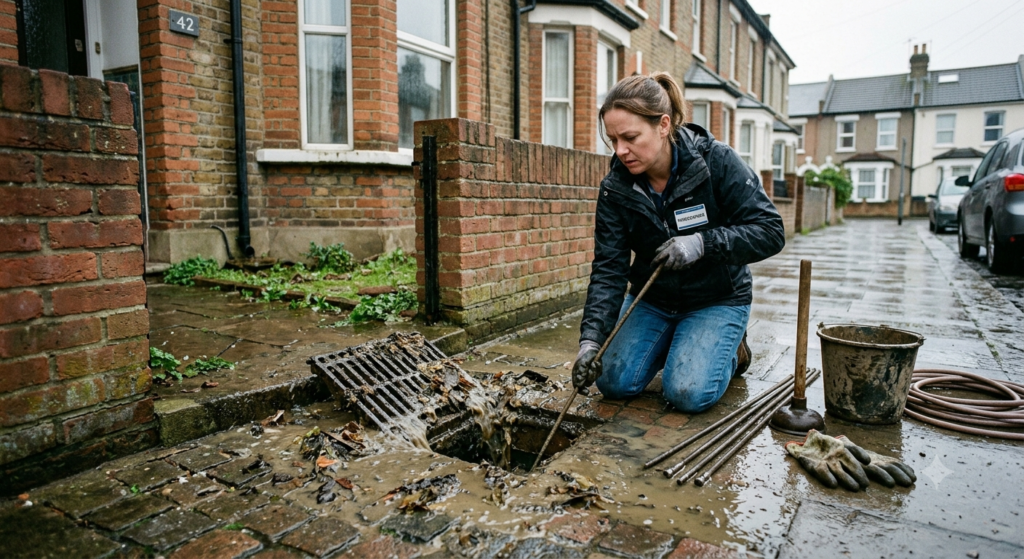
Have you paid for a plumber to clear your drains, only to call them back three months later for the exact same blockage? You are not alone. This cycle is one of the most common complaints we hear from homeowners from the Inner West to Parramatta and the Eastern Suburbs.
Clearing gets water moving again. It does not fix why it was blocked in the first place. In this guide, we break down why recurring blocked drains happen, what slow drains and gurgling toilets are actually telling you, and how to stop paying for the same job twice. We will also show you how we at Sydney No Dig Relining fix the root cause without digging up your yard.
Why Does My Drain Block Again Shortly After Being Professionally Cleared?
When a drain is cleared with a high-pressure jet or an electric eel, the machine punches a hole through the clog. It removes hair, grease, wipes and tree roots sitting inside the pipe at that moment.
What it does not do is repair the pipe itself. If your pipe has a crack, a shifted joint, a belly where water pools, or a rough inner surface, that damage stays. That damage becomes a trap. Toilet paper and waste catch on it and build up again within weeks.
Think of it like mowing weeds. The top is gone for now. The roots are still there. If you have recurring blocked drains every few months, the blockage is a symptom. The pipe condition is the disease.
If your drain blocks again within three to six months of a professional clear, you likely have structural pipe damage, not just a one-off clog.
The Real Culprits Behind Recurring Blocked Drains In Sydney Homes
Sydney has a perfect storm of old pipes, big trees and reactive soil.
1. Tree root intrusion
Sydney Water data shows that tree roots are recorded as the cause of 80 per cent of sewer blockages during dry conditions. National research also found that over 95 per cent of pipe blockages serviced by water utilities are linked to tree roots. Native gums, jacarandas and hills figs around homes from Bondi to Mosman and up to the North Shore chase moisture. They find a tiny leak at a clay joint and push fine hair roots inside. Those roots grow thick and trap everything.
According to Wikipedia, as little as 5 per cent of sewer line blockage is attributed to root invasion in some studies, yet clay and concrete pipes are more likely to be invaded than PVC pipes, with pipe joints being the typical mode of entry. Most of Sydney’s older homes still have that old clay.
2. Cracked, collapsed or misaligned pipes
Clay pipes installed 40-plus years ago are brittle. Soil movement cracks them. Once a section drops or shifts, even by a few millimetres, waste snags. This creates a repeat blockage point.
3. Fat, oil and grease that sets like concrete
Kitchen grease does not wash away. It cools in your pipes and hardens. Jetting can scrape it off, but the rough pipe left behind collects grease even faster next time.
4. Pipe bellies and backfall
In Western Sydney and around Parramatta, reactive clay soil swells when wet and shrinks in drought. This movement creates low spots or bellies in the line. Water sits there. Solids settle. You get slow drains and recurring blocked drains every few months even without tree roots.
5. Flushed items that should never go down
Wet wipes, even so-called flushable ones, sanitary items and paper towels do not break down. They combine with grease and roots to form a solid plug.
Clearing removes what is blocking the pipe today. It does not seal the entry point where roots, grease and waste keep getting stuck.
Why Clearing Alone Is Just A Temporary Patch
Here is the cycle most Sydney homeowners know too well.
- Water is slow or toilet gurgles
- You call a plumber for a clear
- Drain runs free for a few weeks
- Roots grow back thicker, cracks widen
- Blockage returns, often worse
Jetting cuts roots like pruning a hedge. The tree responds by sending more roots back into that same nutrient-rich leak. Chemicals from the supermarket only clear the trap under your sink. They do nothing for a root mass 10 metres out near your boundary.
That is why at Sydney No Dig Relining we always pair a clear with a CCTV drain inspection. Our camera shows you the pipe condition in high definition. You see cracks, joint gaps and root entry points on screen. Then you can make a decision based on evidence, not guesswork.
If you want a full checklist of early warning signs, read our guide on how to tell if your drains are failing and when you need pipe relining. It walks through the exact footage we look for.
We also offer no dig pipe relining across Sydney that restores the pipe from the inside, so roots have nowhere to get back in.
What Gurgling And Slow Drains Actually Are Telling You
Slow drains and gurgling toilets are two of the biggest clues that you have more than a simple blockage. Here is what they mean.
-
Slow drains in shower, bath and kitchen at the same time
When multiple fixtures drain slowly, the problem is usually in the main sewer or stormwater line, not just one trap. Water is struggling to get past a partial obstruction further down.
-
Gurgling in pipes or toilets
That gurgle is air. When water tries to push past a blockage or a belly in the pipe, it pushes air ahead of it. The air bubbles back up through the water in your toilet or floor waste. It often happens when the washing machine drains or a toilet on another level is flushed.
-
The toilet water level drops or rises on its own
This points to a venting issue or a partial blockage creating suction in the line.
-
Bad smells near gullies or garden beds
A cracked pipe leaks sewer gas and wastewater into soil. You might notice extra green patches on the lawn even when it has not rained.
If you have any of these plus recurring blocked drains, it is time to look past clearing. Our team can run a free CCTV inspection and give you a clear quote for a permanent fix.
Slow drains and gurgling toilets usually mean a partial blockage, air trapped by a pipe defect, or a sag that holds water. They are early warnings of structural failure.
Is It Normal To Need Drain Clearing Every Few Months?
No. It is common, but it is not normal. A healthy drain in good condition should not need professional clearing more than once every few years, if at all.
If you need clearing every few months, you have an underlying defect that keeps recreating the blockage. In suburbs close to the Harbour Bridge or the Sydney Opera House where heritage terraces still use original earthenware, or in newer estates in Parramatta where soil movement is heavy, we see the same pattern. Clear, block, clear, block.
Paying for three or four emergency call-outs a year adds up fast. It also risks a bigger failure, like a sewage overflow inside your home or a sinkhole under your driveway where leaking water has washed soil away.
Needing a clearance every few months is a red flag. It signals that your pipe needs repair, not another clear.
Clearing Versus Repair: How the Costs Really Stack Up
Many homeowners keep clearing because relining sounds expensive. When you look at two to three years of repeat costs, the maths often flips. Here is a realistic comparison we see across Sydney.
| Item | Repeat Clearing Only | No Dig Pipe Relining by Sydney No Dig Relining |
|---|---|---|
| What it does | Punches hole through clog | Seals cracks and joints with seamless epoxy liner |
| How long result lasts | 2 to 6 months if pipe is damaged | Up to 50 years with 50-year warranty |
| Root resistance | Roots grow back thicker | 100 percent seamless tube stops root entry |
| Property damage | None, but the problem returns | Zero digging; driveways and lawns remain untouched |
| Hidden costs | Repeated call-outs and possible water damage | No landscape restoration or repeat jetting |
| Property value impact | Ongoing issue on building report | Fixed asset adds value and peace of mind |
The value of water infrastructure work in Australia runs into billions each year, which shows how much ongoing pipe maintenance costs the country. On a single home, one permanent reline usually costs less than two years of quarterly emergency clears plus the cost of fixing a flooded bathroom.
For broader context on root damage, see the Wikipedia article on root invasion in plumbing and research on sewer blockage management in Australia that links over 95 per cent of utility blockages to roots.
How We Fix Recurring Blocked Drains For Good At Sydney No Dig Relining
We do not just clear drains. We restore them. Here is how we break the cycle of recurring blocked drains.
Step 1. Free CCTV drain inspection
We feed a self-levelling HD camera through your line. We locate cracks, offset joints, root mats and bellies with exact distance markers. You watch the footage with us.
Step 2. High-pressure cleaning and prep
We jet the line clean and remove scale and roots so the liner bonds properly. This is the only time jetting actually solves something long-term, because we seal it straight after.
Step 3. Epoxy relining from inside
We install a felt liner soaked in epoxy resin through one small access point. No trenches. No jackhammers through your tiles in Bondi or your sandstone path in Balmain. The liner inflates, cures and forms a new pipe inside the old one. It is joint-free, so roots cannot get back in.
Step 4. Final CCTV verification and 50-year warranty
We camera the line again to prove the seal. You get a video and a 50-year warranty on our relining work. Most residential jobs are done in one day.
This method works for cracked clay, corroded cast iron, PVC with failed rubber rings, sewer and stormwater. If a pipe has fully collapsed or has severe backfill where water pools because the soil has given way, we will tell you upfront if excavation is the safer call. We do not sell relining where it will not work.
Relining fixes the pipe itself. Clearing only fixes the water flow for a few weeks.
What You Can Do Right Now To Stop The Cycle
- If you are dealing with recurring blocked drains every few months, here are practical steps you can take this week.
- Stop using chemical drain cleaners for main line blockages. They do not cut roots and they can damage pipes.
- Keep a simple log. Note which fixture blocks, how soon after a clear it returns, and if you hear gurgling. This helps us pinpoint the section.
- Do not plant large trees within 3 to 5 metres of your sewer line. If you already have them, budget for relining rather than annual root cutting.
- Never flush wipes, cotton pads or cooking oil. Even small amounts build up on rough pipe walls.
- Book a CCTV inspection before your next clearance. Ask for the video file. If you see cracks, offsets or root tails at joints, ask for a relining quote to compare.
Living near landmarks like the Sydney Opera House or the Harbour Bridge means you likely have a mix of heritage plumbing and modern extensions. Those junctions are classic fail points. A quick camera check now can save you an emergency call on a public holiday.
Key Takeaway
If you are stuck in a loop of recurring blocked drains, slow drains and gurgling toilets, it is time to stop paying for temporary relief. Clearing has its place, but on its own it will not fix cracked clay, shifted joints or root entry points that are so common from the Eastern Suburbs to Parramatta and across the North Shore.
At Sydney No Dig Relining, we help Sydney homeowners fix it once and properly. We inspect CCTV for free, show you the problem in plain language, and reline from the inside with no digging and a 50-year warranty.
Ready to break the cycle? Get in touch with our team today for your free CCTV inspection and honest quote. We will show you why it keeps blocking and how to stop it for good.
FAQs
Why does my drain block again shortly after being professionally cleared?
Because clearing only removes the material inside the pipe. If the pipe is cracked, has an open joint or a belly, waste and roots catch again quickly. A CCTV inspection usually shows the defect that keeps causing the repeat blockage.
Is it normal to need drain clearing every few months?
No. It is common in older Sydney suburbs but not normal. Healthy pipes should run for years without a professional clear. If you need clearing quarterly, you have structural damage that needs repair or relining.
What does gurgling in pipes or toilets actually indicate?
Gurgling is air being forced back through water. It means water is hitting a partial blockage or a sag in the line and pushing air ahead. It is an early sign of a blockage forming further down your sewer.
How much does pipe relining cost compared to repeat clearing in Sydney?
Relining in Sydney is usually priced per metre based on diameter, length and access. While the upfront per metre can be similar to excavation, it saves thousands in repeat clears and landscape restoration and lasts up to 50 years.
Can tree roots be permanently stopped without removing the tree?
Yes. Cutting roots with jetting only prunes them. Trenchless relining seals the cracks and joints where roots enter, creating a seamless pipe inside. Roots stay outside and look for water elsewhere, so you keep the tree.
