
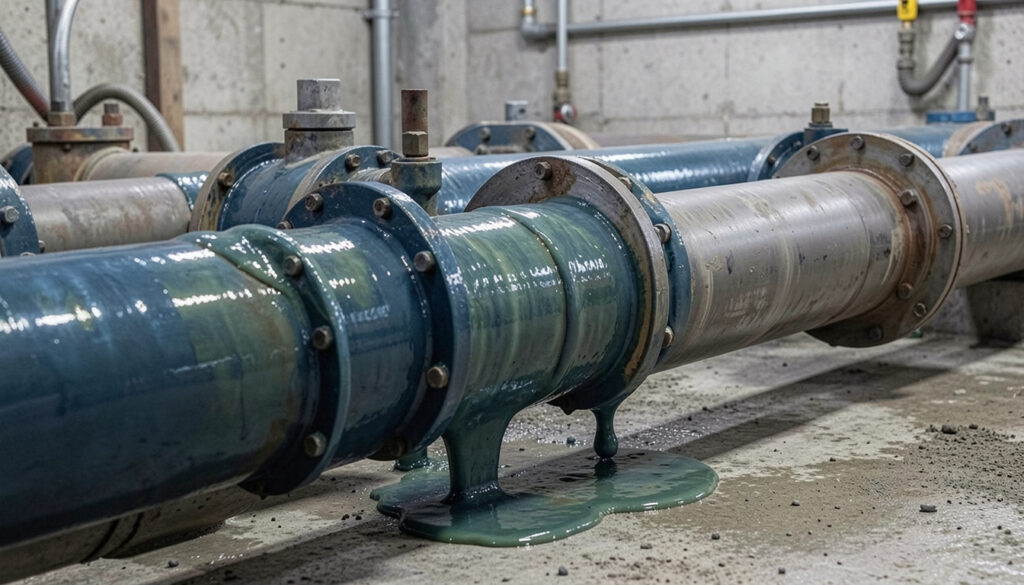
When a sewer or stormwater pipe cracks, gets clogged, or collapses, property owners are often left with an unsavourable decision: dig up the pipe or fix it from the inside.
Trenchless technology has made the latter the preferred method in modern pipe rehabilitation, but it often leaves homeowners with an equally disconcerting question: if you’re not replacing the PVC with an entirely new length of plastic, what exactly is going into my drains?
The answer is a uniquely manufactured composite material. Namely, the epoxy resin pipe lining is the underlying technology which essentially makes a new structural, water-tight pipe within the existing damaged one. Industry standards suggest the “50-year lifespan” of such material, which, at first glance, appears to be a considerable stretch of time.
To grasp the true meaning of such phrasing, one would need thorough knowledge of the subject matter and the field itself. This article details what the epoxy resin pipe lining consists of, explains its mechanism of action, and discusses the characteristics influencing the service life of the re-lined pipe.
What Is Epoxy Resin Pipe Lining?
Pipe lining with epoxy resin is a trenchless pipe repair technique that uses a flexible, resin-saturated textile tube to form a new structural liner inside the existing damaged pipe. The liner is placed inside the existing pipe and then cured to form a durable, joint-free liner with a pipe inside a pipe.
Also known as Cured-In-Place Pipe (CIPP) lining, this method allows plumbers to repair underground drainage and sewer systems without excavating driveways, landscaping or concrete slabs. It can seal leaks, bridge cracks, and smooth surfaces to improve flow and prevent root intrusion.
What Is Epoxy Pipe Lining Made Of?
To understand how a flexible fabric can mimic the robustness of PVC, it is important to review the component parts. Epoxy pipe lining is a composite material which comprises several elements that, when combined together, form a material that possesses better characteristics than the individual components.
At Sydney No Dig Relining, we believe that there are three primary components:
1. The Epoxy Resin
Resin is the main material for the repair. This polymer material is called thermosetting. When exposed to a specific amount of hardener, epoxy resin will change its physical state. A liquid substance will become a solid plastic material that is highly resistant to pressure and fluid penetration.
Unlike cheaper polyester or vinyl ester resins that tend to shrink severely upon curing and cause unpleasant odours, epoxy resin barely shrinks at all and does not off-gas VOCs. It also has good bonding capability to the host pipe material.
2. The Textile Liner
If the resin is the concrete, the textile liner is the steel reinforcing mesh. The liner is usually a collapsible tube of non-woven polyester felt, fibreglass or a combination of both. The liner serves two main purposes:
- It acts as a sponge, absorbing the precise amount of liquid resin needed to inject into the pipe.
- It provides lifting power and flexibility to allow the repair to snake through the line.
Some modern liner products also have a special coating of polyurethane or PVC on the outside. Such liners prevent the resin from washing away when the pipe is being inserted and completely cured and form an additional surface inside the pipe after curing, which has an even more excellent quality.
3. The Hardener (Curing Agent)
A liquid epoxy resin will cure (harden) forever if a catalyst (hardener) is added to it. The catalyst determines how fast the resin will cure and which conditions are required during curing. For some systems, the hardener makes the resin cure at room temperature, while for others it may be necessary to apply heat (hot water or steam) in order for the resin to cure properly.
How Does Epoxy Resin Pipe Lining Work?
The strength of a relined pipe relies solely on its proper preparation and installation. The process usually involves a particular sequence of stages:
- CCTV Pipe Inspection: A specialised camera is fed along the drain to identify the precise location of any cracks, collapses or tree root growths.
- Cleaning and Preparation: The pipe is unblocked and prepared for lining by high-pressure water jetting and root cutting. This removes any tree roots, scale or debris from inside the pipewall.
- Measurement and preparation: The length and diameter of the repair are measured and calculated. The appropriate size of textile liner is cut to size and then mechanically rolled with epoxy resin and hardener to ensure total saturation (wet-out).
- Insertion or Inversion: The saturated liner is inserted into place or inverted (turned inside out) into the pipe by means of air or water pressure.
- Positioning and Inflation: By inflating a calibration tube (bladder) located inside the liner, the resin-soaked liner is forced to tightly conform to the shape of the existing host pipe, thereby sealing all cracks and bridging gaps.
- Curing: The liner is left to cure. As the epoxy hardens, it forms a solid, structural pipe.
- Reinstatement of Junctions: If the relined section of the pipe included any branch or lateral connections, a robotic cutter will be used to open up the necessary joints to reinstate water flow.
- Final CCTV Inspection: A final inspection will take place to confirm that the liner has cured correctly and is free from wrinkles and has sealed the section of piping completely. For further information about the process, you can read our article explaining how pipe relining works.
Why Can Epoxy Pipe Lining Last 50 Years?
It is not uncommon to come across epoxy pipe lining companies advertising a 50-year lifespan of their coating, but where does that number come from, and is it guaranteed? This article will show what the 50 years is based on and what it is actually guaranteed for.
The short answer is that the 50-year lifespan is an engineering standard based on lab testing (namely, the ASTM-F1216 specification), but the 50 years is a design life, not an absolute guarantee.
In these tests, materials to be relined are subjected to accelerated ageing, prolonged loading, and exposure to chemicals in order to replicate conditions underground during their service life. A material that undergoes such testing and emerges whole on the other side with no structural damage is expected to maintain its load-bearing properties for the next 50 years.
The longevity of epoxy resin lining comes down to its chemical properties:
- Corrosion Resistance: Epoxy remains inert to moisture, hydrogen sulphide gases, and common household chemicals found in a sewer system.
- Joint Free: Pipes made by the cured-in-place pipe method are seamless, meaning there are no breaks for tree roots to enter and wreak havoc, as well as places where water can escape.
- Structural Independence: A high-quality epoxy liner is structural. If the original terracotta or concrete host pipe were to rust and decay completely, the epoxy liner is designed to remain intact, holding up the weight of the earth and the structures above it.
What Types of Pipe Damage Can Epoxy Lining Repair?
Epoxy resin pipe lining is highly versatile but is generally used to repair the following:
- Tree root intrusion: sealing the pipes so the roots cannot enter through the opening
- Longitudinal and circumferential cracks: bridging of the splits due to ground displacement around or below the pipes
- Disjointed or out-of-line pipe: bridging of the displaced section restoring the line and grade of the pipeline
- Shortage of pipe: bridging of the section with the lack of pipe
- Corrosion and scaling: rehabilitation of the interior surface of cast-iron or concrete pipe.
Epoxy Pipe Lining vs. Traditional Pipe Replacement
When considering the difference between trenchless relining and excavation, it’s useful to compare the two procedures head to head.
| Feature | Epoxy Resin Pipe Lining | Traditional Pipe Replacement |
|---|---|---|
| Excavation Required | Minimal to none. Access is usually gained through existing inspection openings or minor digging. | Extensive. The entire length of the damaged pipe must be dug up. |
| Property Disruption | Low. Driveways, retaining walls, and established gardens remain intact. | High. Hard surfaces must be demolished and landscaping destroyed. |
| Installation Time | Usually completed within a single day. | Can take several days to a week, depending on trench depth. |
| Material | Seamless epoxy composite (joint-free). | PVC or similar plastic piping (joined every few metres). |
| Longevity | 50-year design life (industry standard). | 50+ year design life (industry standard). |
| Cost Profile | Higher material and equipment costs, but eliminates expensive surface restoration. | Lower material costs, but high labour, excavation, and surface restoration costs. |
Is Epoxy Resin Pipe Lining Suitable for Sydney Homes?
The unique geography in Sydney plus the history of older housing developments make pipe relining particularly relevant here. Some inner west suburbs, eastern suburbs and North Shore areas were built on or around the turn of the century or in the late 1800s and early 1900s. Most homes and buildings constructed before the 70s utilise either earthenware (terracotta) or cast iron for their sewer and stormwater pipes, which are now past their practical lifespan.
Moreover, Sydney is famous for its high-density urban development with established vegetation. In this case, aggressive tree roots, which are trying to get access to the water, often break the old clay pipes, causing frequent blockages.
Because many Sydney homes are built on sloping blocks or have pipes running directly under concrete driveways, heritage tiles or expensive retaining walls, excavation can be both costly and impractical. Utilising epoxy resin lining allows for localised upgrades to more modern standards to occur without disturbing years of established landscaping or using large machinery in delicate areas.
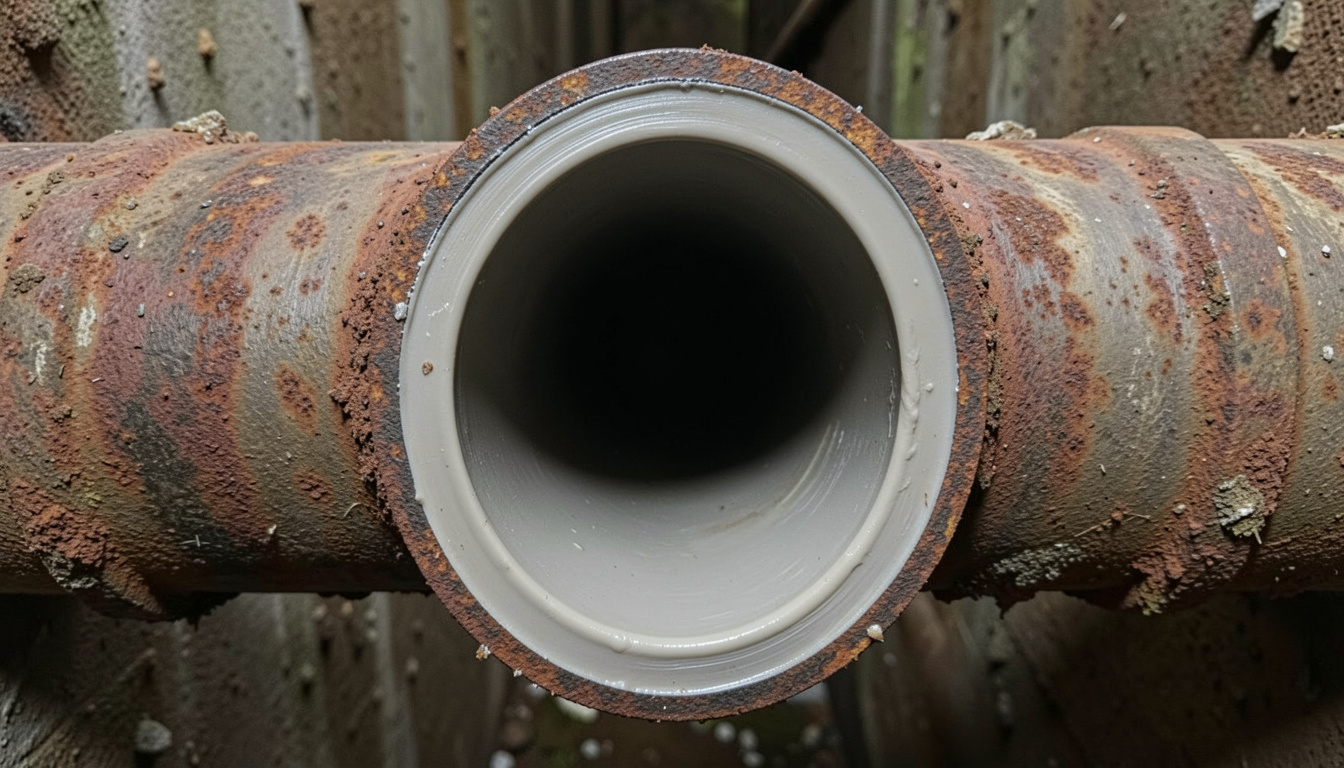
What Can Affect the Lifespan of a Relined Pipe?
While the material has a fifty-year design life, in practice, the useful service life of the installed product will be dictated by such factors as:
- Preparation: If the inside surface of the host pipe is not properly descaled and cleaned before insertion, the resin will not adhere to the host pipe, resulting in water tracking along the liner.
- Accurate Mixing: The epoxy resin and hardener need to be mixed in exact ratios; an incorrect mix will lead to brittle, soft, or uncured liner.
- Operating Conditions: Though it can handle regular household water, industrial chemicals or higher-than-recommended temperatures can permanently damage the resin.
- Ground Settlements: Being flexible, it may survive an earthquake, sinkhole, or ground slippage event but not a severe one, just like a new PVC pipe; a relined pipe can only withstand so much ground movement before failing.
When Might Pipe Relining Not Be Suitable?
Transparency is important when it comes to solutions for drainage problems. The epoxy pipe lining is indeed an amazing technology; however, it cannot fix every possible issue with pipes.
Relining may not be possible or appropriate if:
- The pipe has completely collapsed: The process of relining requires the presence of a cavity in the pipe. If the pipe has been crushed and the opening is blocked by soil, the camera and liner will not be able to pass through.
- There is a severe belly (sag) in the pipe: the relining process follows the contour of the existing pipe. If the pipe has sagged (belly) and contains a pool of water, the relining process will not correct the gradient. It will simply seal the leaks.
- The pipe is too badly deformed: If the host pipe has been crushed to the extent that more than 10-15% of the diameter is lost, a liner would cause an unacceptable restriction to the flow.
In these specific instances, targeted excavation and replacement is the only viable engineering solution.
How Sydney No-Dig Relining Approaches Pipe Relining
If you decide that relining is the best choice for you, we utilise top-grade epoxy resins and calibrated cure times to ensure that the end result meets the exact structural requirements of the job. Our emphasis is on proper preparation and application in order that the lining will provide years of service. This will allow you to avoid the expense and inconvenience of roots invading the pipe structure and having to have the ground dug up in order to repair the damage.
If you decide that relining is the best option for you, we will make sure to use the best epoxy resins and calibrate their curing time so that the finished lining will be perfect in its structural capacity. We take great care in the preparation and application so that the new lining can provide the maximum service time, protecting your property from the expensive excavation of roots.
To Conclude
Unlike a mere repair, epoxy resin pipe lining is actually a permanent renovation solution, and the results speak for themselves. The high tensile strength of the liner made of textile fibres plus innovative epoxy polymers creates a jointless, corrosion-resistant pipe that can resist the intrusion of tree roots and high ground pressures for years to come.
While the 50-year design life is a testament to the strength of the materials, the truth is that the proper inspection, preparation, and installation are what make a relined pipe last.
If you suspect that your pipes may be damaged, leaking, or blocked by tree roots, it pays to know exactly what is happening underground. Call us today to come and do a thorough CCTV inspection, and discover the trenchless epoxy solution may be able to help.
Frequently Asked Questions
What is epoxy resin pipe lining?
A trenchless repair method in which a resin-saturated fabric tube is inserted into the damaged pipe. The resin is then cured to produce a new structural pipe within the existing pipe, repairing leaks and cracks in the process.
What is pipe relining made of?
Pipe relining is typically made of a flexible fabric liner (such as non-woven polyester felt or fibreglass), which is fully impregnated with a two-part epoxy resin. Once mixed, the two-part epoxy resin is cured with a hardener to make a durable plastic-like material.
How long does epoxy pipe lining last?
High-quality epoxy lining of pipes has a standard service life of 50 years according to industry standards. This indicator is based on accelerated lifetime tests that simulate the conditions of decades of use. The actual useful life of the coating is also affected by the installation quality and pipe conditions.
Can epoxy pipe lining fix tree root damage?
Yes. Tree roots seek out water supplies through broken pipe joints. However, by using epoxy pipe lining to line the interior of the pipe, the joint is sealed for good, permanently eliminating the opening that the tree roots are using to get into the pipe.
Is pipe relining suitable for old Sydney pipes?
Yes. The re-lining method is the most convenient for the replacement of the old terracotta and cast-iron pipes typical of older Sydney suburbs. This approach allows the homeowner to avoid excavating their established garden, replacing the pavers on their driveways, or damaging some other beloved wares of the bygone era.
Is epoxy pipe lining safe for sewer pipes?
Yes. Epoxy resin is resistant to corrosive hydrogen sulphide gases, moisture, and temperature variations present in domestic sewer lines. The resin is independently durable and will not break down when exposed to these conditions.
What is the difference between pipe relining and pipe replacement?
Pipe replacement requires digging up the ground to physically remove and replace the broken pipe. Pipe relining is a trenchless pipe repair technique that restores the pipe from the inside of the damaged section, avoiding the need to dig and saving both time and money.
