
Generally, people don’t consider their underground piping until some mishap occurs to them. For example, a blocked toilet, a shower that takes forever to drain, or an unpleasant odour wafting in the backyard.
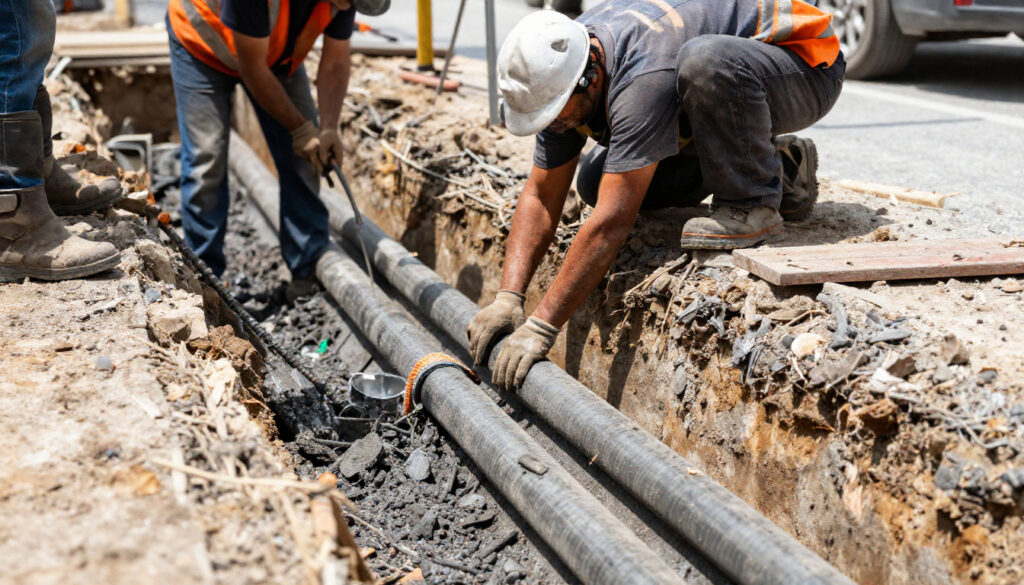
In the past, the solution for a broken sewer or stormwater drain was quite straightforward but very destructive: you had to get the excavator, dig up the whole driveway or garden, and replace the plumbing, and then the homeowner ended up with a huge bill for both the plumbing and the landscaping repair.
Still, there is a more effective way. We at Sydney No Dig Relining often talk to the property owners who are surprised to find out that they do not have to destroy their property to repair a broken drain. The trenchless pipe repair addresses the very cause of the problem inside and out.
If you’re a home owner, strata manager or commercial property investor, and you are looking at your options, this guide explains in detail how pipe relining works, what the procedure includes, and what you should know prior to employing a professional.
What Is Pipe Relining?
How does pipe relining work? Pipe relining involves no digging and is simply trenchless pipe repair that allows you to have a new, good-condition pipe inside your old broken one. We bring in a textile liner made especially for your pipe, soaked with super-strong epoxy resin, into the pipe that is broken. Then we blow it up and let it dry so that it forms a permanent seal.
Cured-in-place pipe lining or pipe rehabilitation are other names for this method that is done to completely seal cracks, bridge missing pipe areas, and give the pipe a smooth inner surface that will effectively prevent tree root intrusion.
Why Traditional Pipe Replacement Isn’t Always Necessary
When a plumber says your pipe needs to be replaced, it doesn’t necessarily mean that you will have to dig. Actually, digging should normally be considered a last resort.
Digging up a pipe is just plumbing, part of the story. Along with the plumbing work, you may also have to pay for earthmoving, cutting the concrete, and restoring the elements that were placed on top of the pipe after the pipe is fixed. This could be, for example, a heritage garden in the Eastern Suburbs, a newly laid driveway in the Hills District or a tiled retaining wall.
Pipe relining gets rid of the collateral damage. Without digging up the whole area, by using existing access points (such as inspection openings or manholes), we can rehabilitate the pipe completely underground.
The Step-by-Step Pipe Relining Process
Many folks think relining is just inserting a PVC sleeve into an old drain. Actually, it is a lot more technical. We at Sydney No Dig Relining follow these exact steps to make sure the fix lasts permanently.
1. CCTV Drain Inspection
It’s essential to identify the problem with a pipe accurately before attempting to repair it. We accomplish this by sending high-definition CCTV drain cameras through the pipe to detect any cracks, blockages, and tree roots present.
Why it matters: Correct inspection is key to avoiding catastrophic errors. For example, if a plumber tries to reinstall a pipe that has a “belly” (a sagging part where water gets pooled) with a liner without first identifying the problem, the liner will just wrinkle along the sag and the water pooling problem will persist.
2. Cleaning the Pipe
If you’re looking to line a pipe, it has to be free of dirt, grease, and roots. That is why we first clean the inside thoroughly by using high-pressure water jetting (hydro jetting) and robotic cutting tools to get rid of all the grime and roots so that the pipe is exposed as it was originally. Besides removing all the obstructions, it gives a clean, fresh surface for the resin to properly adhere to.
3. Measuring and Preparing the Liner
After getting the data through our CCTV drain inspection, we identify the exact length and diameter of the pipe that needs fixing. Next, we prepare a textile liner of the same dimensions.
4. Resin Saturation (Wet Out)
This is really the heart of our process. We combine a two-part epoxy resin and pour it into the liner. Then we use special rollers to push the resin through the felt material; this is called “wetting out”.
5. Installation
We insert the resin-saturated liner inside the pipe by the inversion method (the liner gets turned inside out as it moves down the pipe, pressing the resin against the pipe walls) or a drag-in method, depending on the site access. After positioning the liner, we inflate an internal bladder, which expands the liner tightly against the walls of the existing pipe.
6. Curing
Epoxy resin has to be left to harden. The method used to cure the resin depends on the time the repair will take as well as the type of the epoxy used, and apart from ambient curing (setting at usual temperatures), there is also accelerated curing with the use of hot water or steam.
The hidden detail: Curing temperature plays a vital role. If a contractor hurries a heat cure, the resin can turn brittle and crack. If an ambient cure slows down too much in cold weather, it probably will not attain the required structural strength. That is why we keep a close eye on the curing temperatures to get the right set.
7. Final CCTV Inspection
After the bladder is deflated and taken out, the camera is sent down again. Clients are given this footage to visually witness the neat, well-formed, brand-new pipe themselves.
Which Pipes Can Be Relined?
Our pipe repair systems for underground projects are very flexible. We are able to reline them quite easily in the following:
- Clay pipes: This type of gutter is very typical of the older Sydney houses, especially those located in the Inner West and Northern Beaches. However, they are quite famous for cracking and allowing tree roots to enter the property.
- Cast iron pipes: You can come across them mostly in commercial buildings and older apartment blocks. Relining prevents the internal rusting and flaking which causes frequent blockages.
- PVC pipes: Though less vulnerable, PVC pipes may also get crushed when the ground moves significantly or if they were not installed properly in the first place.
- Sewer pipes: Safely seals raw sewage leaks.
- Stormwater pipes: Prevent flooding and property damage during heavy downpours in Sydney.
Can Pipe Relining Fix Collapsed Pipes?
Can a fully collapsed pipe be relined? No. Pipe relining needs the pipe to be the host of the liner so that it can maintain the form while it is curing. If the old pipe is so collapsed or crushed flat under the earth that you can’t see inside it, then the only thing that can be done is to dig up and physically replace that section.
This is the reason why we strongly recommend homeowners respond immediately to a blocked drain that keeps getting repaired. Repairing a cracked drain by relining it is an easy job. If the pipe is left until it collapses, then it will be a very expensive dug-up job.
How Long Does Pipe Relining Take?
How long does the pipe relining process actually take? Generally, a home pipe relining project is wrapped up within a day. Usually, we show up in the morning; by the time your drains are cleared and ready, pipe relining with epoxy is installed, curing time is given, and finally, your plumbing is back to normal work before the night!
Traditionally, replacing pipelines means noisy excavation for a few days, soil removal, laying pipes, backfilling, and concreting. For strata properties or businesses close to busy hubs such as the Sydney CBD or Parramatta, shortening the downtime to just one day gives a great operational edge.
Pipe Relining vs Pipe Replacement
| Feature | Pipe Relining | Traditional Pipe Replacement |
|---|---|---|
| Digging Required | Minimal to none | Extensive trenching |
| Project Duration | Usually 1 day | 3 to 7 days |
| Landscape Damage | None | High (ruins lawns, driveways) |
| Tree Root Resistance | 100% (No joints) | Vulnerable at the joints |
| Overall Cost | Highly cost-effective | Expensive due to restoration costs |
Expected Lifespan: Why Do Liners Fail?
When properly installed, the lining pipe can have a service life of 50 years. It is a structural pipe basically inside another pipe. It surpasses PVC in strength and is very resistant to ground movement and tree root intrusion.
But even if liners are installed by beginners, they can and do break. Failure is mostly caused by:
- Bad pipe preparation: A lack of proper cleaning and root removal results in the resin adhering to a dirty surface instead of the pipe wall.
- Affordable resin: The use of below-standard, low-quality resins to save money causes liners to become fragile and prone to cracking.
- Wrong measurements: When the liner is cut too short, a gap is left that will allow roots to enter again.
At Sydney No Dig Relining, we use only top-quality, high-density epoxy resins that have been tested to stand up to Australian conditions.
Common Misconceptions: Myth vs. Fact
Myth: The relining process narrows the pipe diameter and impedes water flow.
Fact: Even though the liner does take away a few millimetres of the pipe diameter, the refreshed epoxy surface is way smoother than the old clay or rusted cast iron. This leads to increased flow rate and less friction, so the wastewater moves out more quickly than before.
Myth: Pipe relining is just a temporary patch.
Fact: This is a permanent, structural type of repair. When the liner is cured, it is fully self-supporting. Therefore, the new internal pipe will still be intact even if the old host pipe completely rots away eventually.
When Pipe Relining Isn’t Suitable
Even though we promote trenchless pipe repair, honesty is our policy, and we will tell you when it is not the best option. Relining is not suitable:
- The pipe has a severe belly: In case a pipe sags significantly, merely relining it would result in a smooth pipe that still sags. Water sits in the sag and causes blockages. The pipe needs to be excavated and re-graded.
- Total collapse: As mentioned, crushed pipes must be excavated.
- Extreme misalignment: When a pipe joint breaks and the pipe drops by a large amount, the liner will not be able to cover the huge gap physically present between the two pipes.
Why Professional Installation Matters
Pipe relining is a highly specialised trade. Besides knowledge of fluid dynamics and curing of materials, you also need to be familiar with local regulations.
Compliance is a must when dealing with sewer lines and stormwater drains, even when working near Sydney Water assets. A regular worker can get away with cutting corners but only a licensed and experienced team would be able to deliver work that is up to code with NSW Fair Trading and Standards Australia.
Fixing a relining job that has been botched is almost a nightmare. You can’t just take out a finished liner; instead, it will have to be violently milled out with the help of robotic cutters, or the whole pipe will have to be unearthed. Bringing in an expert for the first time safeguards both your property and the money you have in your wallet.
Have a Broken Drain in Sydney?
Are you encountering frequent blockages, catching tree root invasions or broken pipes? Before calling an excavator to your property, why not first examine your other options? Sydney No Dig Relining has been offering sincere evaluations, clear advice, and trenchless pipe repairs throughout Sydney, from the Eastern Suburbs all the way to Penrith.
Contact us today to schedule a thorough CCTV drain inspection. We can show you in detail what’s going on beneath your property and let you know if pipe relining is the correct fix for your house.
Frequently Asked Questions (FAQs)
Is pipe relining worth it in Sydney?
Yes, definitely. Considering the price of property, landscaping and labour in Sydney are very high, pipe relining is very cost-effective and affordable. It means that you will not have to spend thousands of dollars restoring concrete driveways, retaining walls, or heritage gardens, which are in fact, the things most likely to get destroyed by the traditional trench digging.
Does pipe relining work on old clay pipes?
Absolutely. Relining is the best method for clay pipes that have become old. Clay pipes are prone to cracking and tree roots penetrating the joints. An epoxy resin liner effectively closes the cracks, fills the gaps, and forms a smooth, root-resistant interior with no need to excavate the delicate clay.
Can pipe relining fix tree root damage?
Yes. Once the tree root intrusion is removed by a high-pressure hydro jetter or robotic cutter, the new liner that has been installed will fully seal the pipe. As the relined pipe is one continuous piece and does not contain joints, tree roots cannot find a way to enter.
How much digging is required for pipe relining?
Very little. Trenchless pipe repairs are done using the existing openings like inspection ports, manholes, and small access holes. In fact, we can also do the repairs of pipes running under the driveways, buildings, and other landmarks, like the foreshore of the Parramatta River, without causing any disturbance at all.
How long does an epoxy liner actually last?
If installed properly with high-quality materials, a cured-in-place pipe (CIPP) liner can structurally last for up to 50 years. It is intended to be a lasting fix, almost impervious to ground displacement, pressure, and the intrusion of roots.
Is pipe relining cheaper than pipe replacement?
Frequently, yes. Although the main components for relining are high quality, typically the total price of the project is considerably less than a new installation. In fact, you save a lot by not having to do the very expensive excavation work, leasing and operating heavy equipment, soil disposal, and above all, the huge cost of landscaping and restoring concrete.
What happens if you reline a sagging pipe?
Relining a severely sagging pipe, i.e., a belly, is an error. The liner will harden in the shape of the sag, which means that water and debris will continue to accumulate in that area. During a CCTV inspection, a pro will never miss the belly and will advise excavating that part only.
